The basics
Sudoku rules
The rules fit in one sentence, but a few details are worth knowing, especially what makes a puzzle valid.
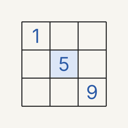
Place the digits 1 to 9 in a 9 by 9 grid so that each row, each column and each of the nine 3 by 3 boxes contains every digit exactly once. The starting digits must never be changed, and a proper puzzle has exactly one solution.
The three constraints
- Rows: each of the nine rows holds 1 to 9 once.
- Columns: each of the nine columns holds 1 to 9 once.
- Boxes: each of the nine 3 by 3 boxes holds 1 to 9 once.
All three must be true at the same time. A digit repeated in a row is a mistake even if its column and box look fine.
What counts as a mistake
- The same digit twice in a row, column or box.
- A digit that is not forced by logic, even if it happens not to break a rule right away. Every empty cell has exactly one correct digit.
- Changing a given digit. The clues are fixed.
What makes a valid Sudoku
A proper Sudoku has exactly one solution. If a puzzle has several solutions, solvers cannot be sure that any digit is forced, and the puzzle is considered flawed. There must also be enough clues: the smallest number of clues that can give a unique solution is 17. Learn why in why a Sudoku has one solution.
Do I need to guess?
No. Puzzle setters design Sudoku to be solved by deduction. Techniques such as naked singles or X-Wing are just names for common deductions. Guessing is not part of the rules.
Variants
The classic game is 9 by 9, but you will meet other grids and rule sets. Killer Sudoku removes most of the given digits and adds cages with a target sum: the digits in a cage add up to the number shown and never repeat. See Killer Sudoku rules.
Frequently asked questions
Can a digit repeat in a Sudoku box?
No. Each 3 by 3 box must hold the digits 1 to 9 once each, like every row and column.
How many solutions should a Sudoku have?
Exactly one. A puzzle with several solutions is not a proper Sudoku.
What is the minimum number of clues?
At least 17. No valid 9 by 9 Sudoku with 16 clues exists.
Are diagonals part of the rules?
Not in classic Sudoku. Only a variant called Sudoku X adds the two diagonals.